CHAPTER 09 · ASSESSMENT BEFORE THE WORK
Which property conditions need assessment before the new finish goes on.
New tiles, new flooring and a new bathroom all sit on whatever is already there. If the wall is out of line, the floor moves or moisture has got in, the finish will show it sooner or later. That’s why the first thing we do is look properly at the surface, and why the scope of work, materials and methods depend on what the assessment finds.
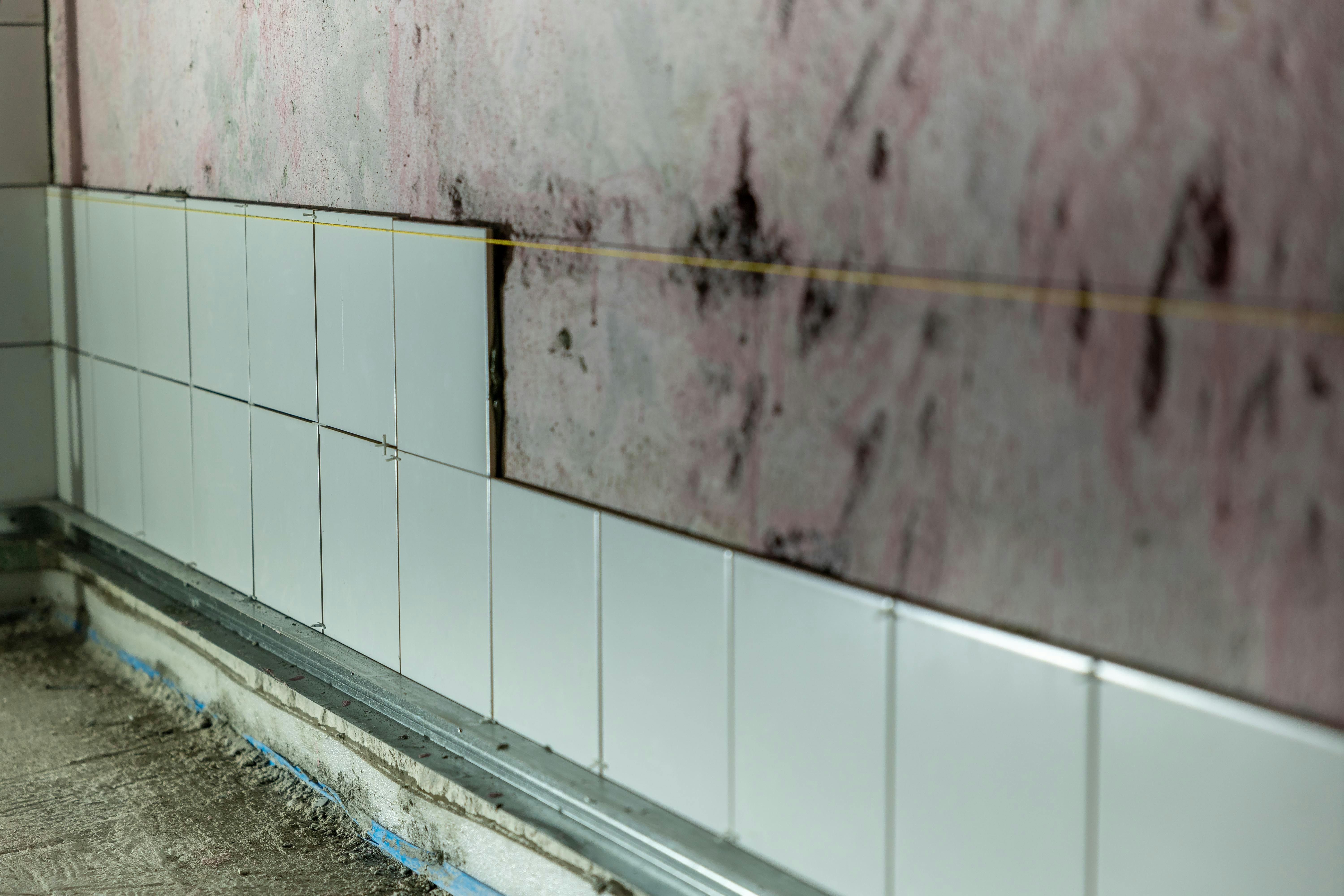
Illustrative photograph
WORTH A CLOSER LOOK IF YOU NOTICE
✓ Tiles that sound hollow when tapped, or have lifted
✓ Cracked tiles, or grout that keeps cracking
✓ Floors that dip, bounce or feel uneven underfoot
✓ Dark staining, persistent mould or a musty smell
✓ Soft or crumbling plaster behind wet areas
✓ Failed silicone around the shower, bath or splashback
✓ Earlier tiling laid straight over older tiles
None of these automatically means a big job. They’re the signs that tell us what needs checking before a quote can be accurate.
WHAT WE CHECK, SURFACE BY SURFACE
Every surface tells you something different
After around 15 years of residential renovation work, Ivan’s view hasn’t changed: a good renovation depends on what happens before the final finishes are installed.
Walls
We check whether the wall is flat and plumb, how firmly the existing tiles or plaster are holding, and whether the backing is sound enough to take new tiles. A wall that’s out of line affects how the layout is set out and where cuts land.
Floors
Levels, movement and the condition of the substrate all matter for floor tiling and flooring. Some floors need levelling or extra surface preparation before anything new is laid.
Wet areas
In bathrooms and laundries, staining, mould and soft plaster can point to water getting where it shouldn’t. We look for the signs and explain what they could mean, so you can decide how far the work should go.
Kitchen splashbacks
Behind a kitchen splashback, we check the wall surface, old adhesive and how the new tiles will meet benchtops, cabinetry and power points.
Once the surface has been assessed, see What tiling work involves →
WHAT AN INSPECTION CAN AND CAN’T SHOW
Some conditions only show once the old finish comes off
A site visit tells us a lot, but not everything. Concealed damage behind tiles or under floor coverings, or a change to the agreed scope, may affect the work. If that happens, we stop and talk it through with you before going further. Read more about concealed damage and scope.
WHEN ANOTHER TRADE IS NEEDED
If the assessment points to plumbing or electrical work, Ivan doesn’t do that himself. He coordinates it with appropriately licensed tradespeople as part of the renovation. Architectural design and engineering aren’t part of our service, so if a condition needs that kind of advice, we’ll tell you plainly. How we work with licensed trades.
QUESTIONS HOMEOWNERS ASK
Before you book a look
Is the inspection free?
Yes. The site inspection and the quote are both free. How the inspection works.
Can photos replace a visit?
Photos or a short video help Ivan understand the job before he comes out, but surfaces usually need to be seen and tested in person. What to photograph.
Will you tell me if a full renovation isn't needed?
Yes. Ivan explains what work is necessary and why he recommends a particular approach. Sometimes that’s a smaller repair rather than a full room.
Is this an emergency service?
No. We don’t offer a 24-hour emergency repair service. Assessments are arranged with you directly, across Melbourne and surrounding suburbs.
→
Noticed one of these signs at home? Send Ivan a text with a short description and a few clear photos on 0413 142 055, or request a free quote. Ivan reviews every enquiry himself and arranges the inspection with you.